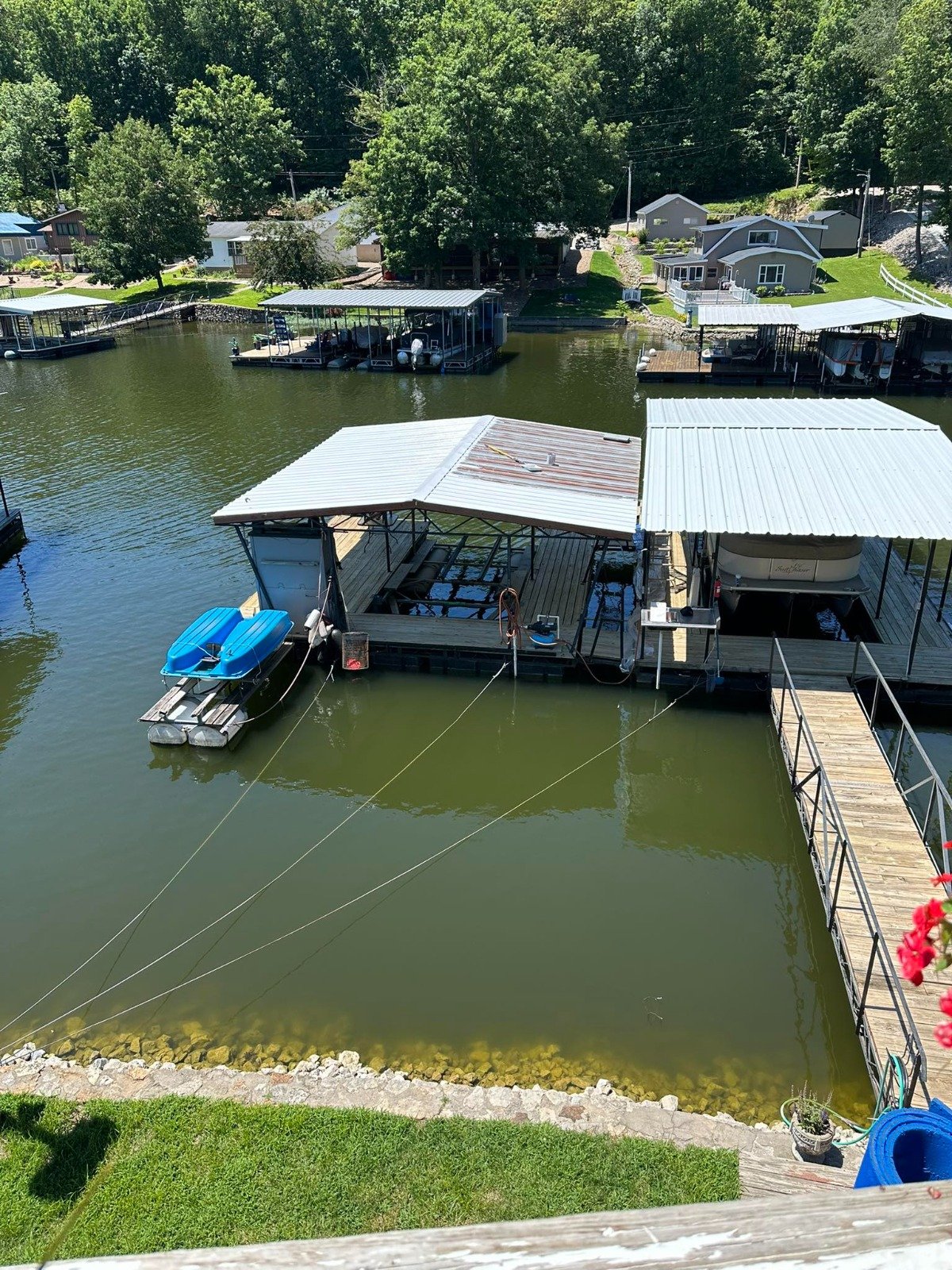
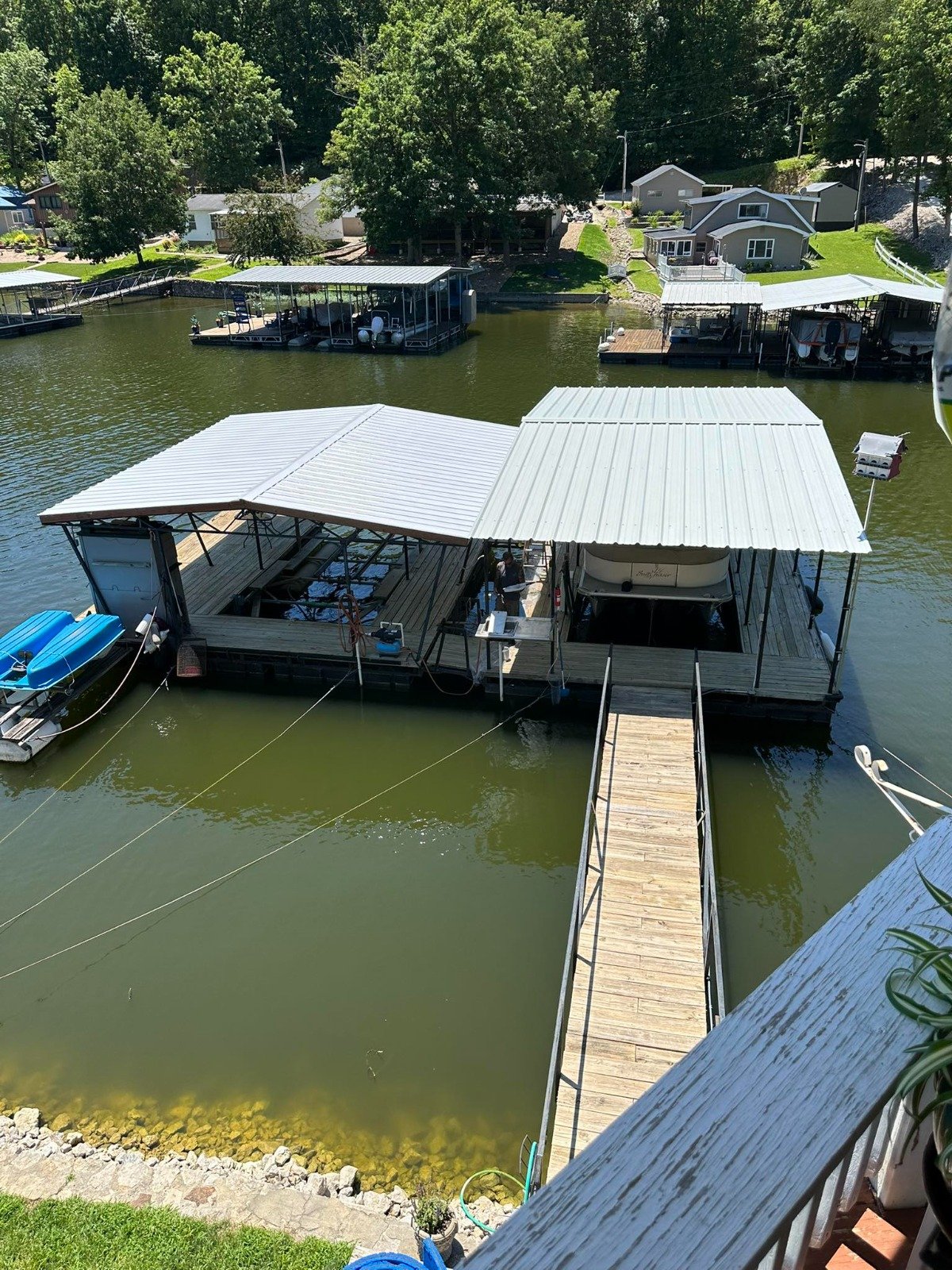
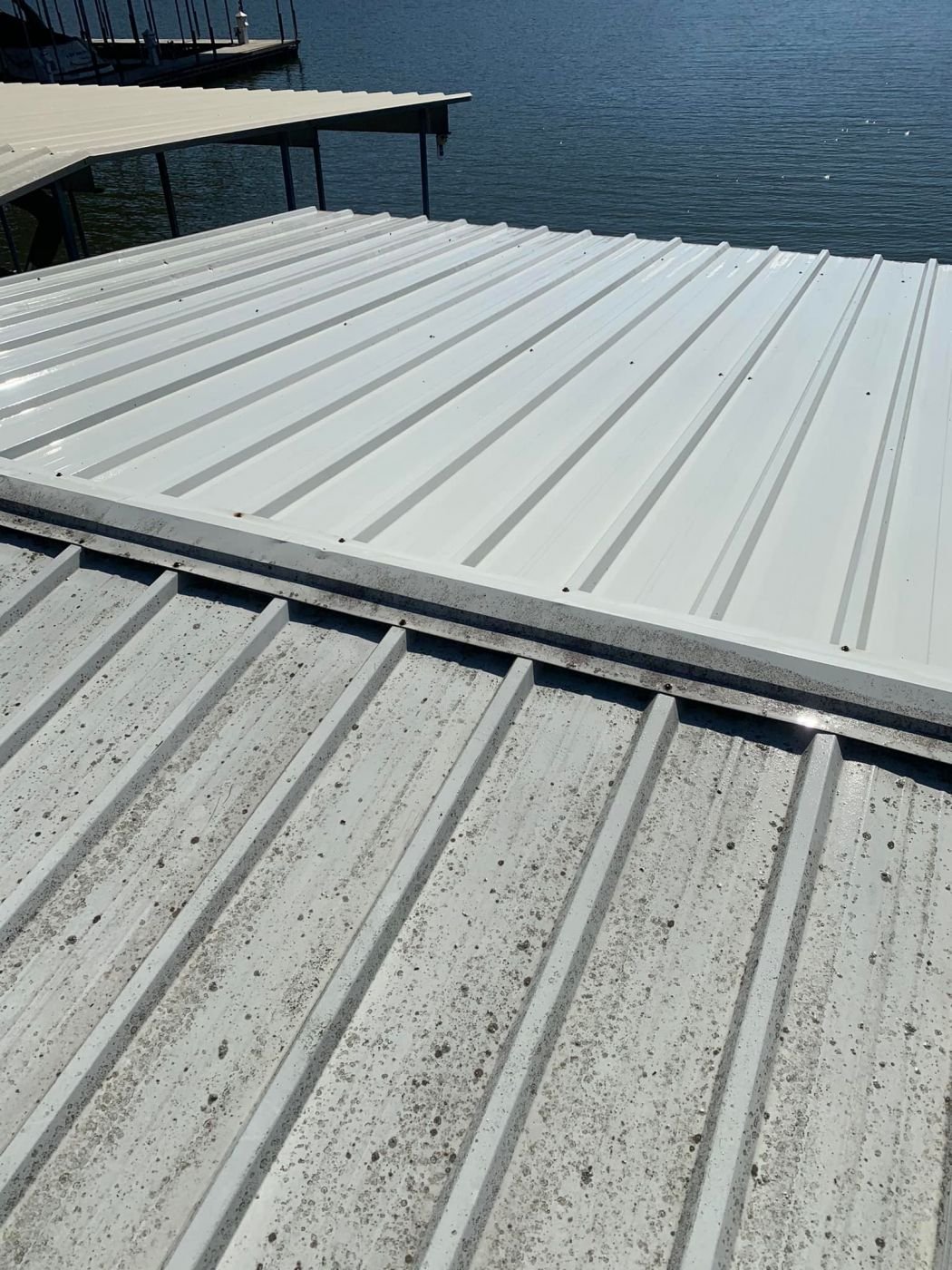
Dock Roof Cleaning in Camdenton, MO

Camdenton’s Dock Roof Cleaning Specialists — Serving Camden County Since 1992
If you own a lake property in Camdenton or the surrounding Camden County communities, you already know what the wooded cove environment does to outdoor surfaces by the end of a Missouri summer. The deck is darker than it was in May. The dock boards have that slick, greenish tint that means algae has been busy. And the dock roof — particularly if the property sits in a north-facing cove or under a tree canopy that keeps the roof shaded through most of the day — is streaked with dark mold and biological staining that makes the whole structure look like it’s been abandoned rather than actively used.

Camdenton’s combination of heavy tree canopy, cove geography, and the slow-water conditions along the Grand Glaize arm creates some of the most aggressive dock roof mold growth conditions anywhere on Lake of the Ozarks. Dock roofs on wooded cove properties here don’t just accumulate biological growth — they accumulate it faster, in heavier concentrations, and from a wider variety of biological sources than properties with better sun exposure and airflow.

My Handyman LOZ has been cleaning dock roofs on Camden County lake properties since 1992. We know what Camdenton’s wooded cove environment produces on dock roof surfaces, we apply the soft washing methods that address it correctly, and we deliver results that restore dock appearance and slow the return of biological growth in conditions that favor it heavily.

✔ Serving Camdenton & Camden County Since 1992  |  ✔ Wooded Cove Dock Specialists  |  ✔ Soft Washing + Biofilm Treatment  |  ✔ All Roof Materials + Surface Types

Call or Text 573-217-6060 for a Free Dock Roof Cleaning Estimate

Why Camdenton Dock Roofs Grow the Heaviest Mold on the Lake

Camdenton’s position at the heart of Camden County — surrounded by the wooded hillsides, cove-heavy geography, and slow-water Grand Glaize arm that define this stretch of the lake — creates dock roof mold conditions that are more aggressive than most other locations on Lake of the Ozarks. The reasons are specific and compound each other.

Heavy tree canopy eliminates the UV factor

UV exposure from direct sunlight is one of the natural limiting factors on biological growth on outdoor surfaces. On a dock roof with several hours of direct sun daily, the UV exposure and surface heating that come with it dry the roof surface and inhibit mold development. On a heavily shaded Camdenton cove dock — where the tree canopy keeps the roof in shade for most of the day — that limiting factor is essentially removed. The roof stays damp, stays shaded, and provides the ideal biological growth environment continuously through the warm months.

Organic debris from the tree canopy feeds the growth cycle.

Camdenton wooded lots deliver a continuous organic debris load onto dock roof surfaces — pollen in spring, organic material through summer, leaf debris in fall. That material doesn’t just accumulate on the roof; it decays there, feeding the mold and biological growth that the humid lake environment already supports. A dock roof under a mature oak or hickory canopy is essentially being continuously fertilized with the organic material that mold thrives on.

Cove humidity stays elevated close to the water

The limited water circulation in Grand Glaize arm coves keeps local humidity higher than open water positions — and dock roofs positioned close to the water surface in these coves absorb that elevated humidity from below even as precipitation and dew deliver moisture from above. The result is a roof surface that rarely reaches the dryness threshold that limits biological growth establishment.

Seasonal closure accumulation

Many Camdenton lake homes close in October and reopen in May. A dock roof that closes with moderate biological growth has seven months of uninterrupted growth ahead of it — with no cleaning, no foot traffic below to observe changes, and the full Missouri winter freeze-thaw cycle to work biological material into roofing seams and substrate. Spring opening often reveals roof conditions significantly more advanced than the previous fall closing suggested.

The Organic Debris Problem — Unique to Wooded Camdenton Properties

On Camdenton dock roofs under heavy tree canopy, the cleaning challenge has a dimension that open water dock roofs don’t share: the organic debris layer that accumulates on the roof surface before mold and algae even become visible.
Leaves, seed pods, pollen masses, bark fragments, and general organic material from surrounding trees collect on dock roof surfaces — particularly in the valleys and low points of metal panel roofing where debris naturally concentrates. That layer stays wet from cove humidity and rain, decomposes slowly, and creates an organic medium that mold colonizes before the growth becomes visible to a homeowner looking up from the dock surface.
By the time dark streaking is visible on a Camdenton dock roof from below, the growth has typically been establishing in the organic debris layer on the roof surface for weeks or months. The visible staining is the mature stage of a cycle that started earlier and less visibly.
This is why Camdenton dock roof cleaning requires debris removal and organic layer clearing as part of the cleaning process — not just chemical treatment of visible biological growth. Professional soft washing that addresses both the organic debris accumulation and the underlying biofilm layer delivers results that last significantly longer than surface-only treatment on wooded cove properties.

Soft Washing for Camdenton’s Wooded Cove Dock Roofs

The heavy biological growth conditions that Camdenton’s wooded cove environment produces require a cleaning approach that’s calibrated for what’s actually there — not a generic application of whatever method is fastest or most convenient.

**Debris clearing** before soft washing is the necessary first step on Camdenton dock roofs with significant organic accumulation. Applying cleaning chemistry over a thick organic debris layer produces inconsistent results — the chemistry contacts the debris layer rather than the roof surface and biological growth beneath it. Clearing loose organic material first ensures the soft washing treatment reaches what it needs to reach.

**Professional-grade cleaning solutions** formulated for heavy biological growth — not consumer-grade deck cleaners — are what the mold and algae conditions on shaded Camdenton dock roofs require. The chemistry needs to penetrate through established mold colonies to reach and kill the biofilm foundation layer, not just remove the visible surface growth.

**Biofilm treatment** is particularly critical on Camdenton dock roofs because the conditions that drove the initial biological growth establishment — shade, humidity, organic debris — are still fully present after cleaning. Without treating the biofilm layer that allows rapid regrowth, a Camdenton shaded dock roof can have visible biological growth returning within weeks of surface cleaning. Biofilm treatment extends the clean period significantly in these challenging conditions.

**Low-pressure application** protects the roofing material — metal panel seams, rubber membrane surfaces, and wood framing at connection points — from the moisture infiltration damage that high-pressure washing causes. In a wooded cove environment where the roof is already managing moisture exposure from multiple directions, pressure-induced seam damage is a real structural concern, not just a theoretical one.

My Handyman LOZ calibrates every dock roof cleaning approach to the specific conditions at the Camdenton property — debris accumulation level, roof material type, growth severity, and shade conditions all factor into the cleaning plan before work begins.

Dock Roof Cleaning and the Seasonal Camdenton Lake Calendar

For Camdenton lake homeowners — particularly those with seasonal properties that close in fall and reopen in spring — dock roof cleaning needs to fit into the maintenance calendar in a way that delivers maximum value for the specific occupancy pattern.

Spring opening dock roof cleaning

is the highest-priority maintenance window for Camdenton seasonal properties. After seven months of unobserved growth through a Missouri winter, dock roofs on wooded cove properties often present with the most extensive biological growth of the year at spring opening. A thorough soft wash at opening clears that accumulated growth, treats the biofilm layer, and resets the roof’s appearance and biological baseline for the season.

Midsummer cleaning

on shaded Camdenton properties particularly those under heavy tree canopy with north-facing roof exposure — may be appropriate if the spring clean is done before significant seasonal growth has established and the summer conditions accelerate regrowth faster than a twice-yearly schedule controls. We assess individual property conditions and advise on the right frequency honestly.

Fall closing cleaning

removes the full season’s biological accumulation before winter — preventing the deep penetration into roofing substrate and wood framing that sustained winter mold conditions produce. A fall-cleaned dock roof in spring requires significantly less effort and cost to restore to clean condition than one that closed dirty.

My Handyman LOZ coordinates dock roof cleaning with the broader seasonal dock cleaning service — roof and surface in the same visit — to make the best use of the service window that seasonal Camdenton property owners have available.
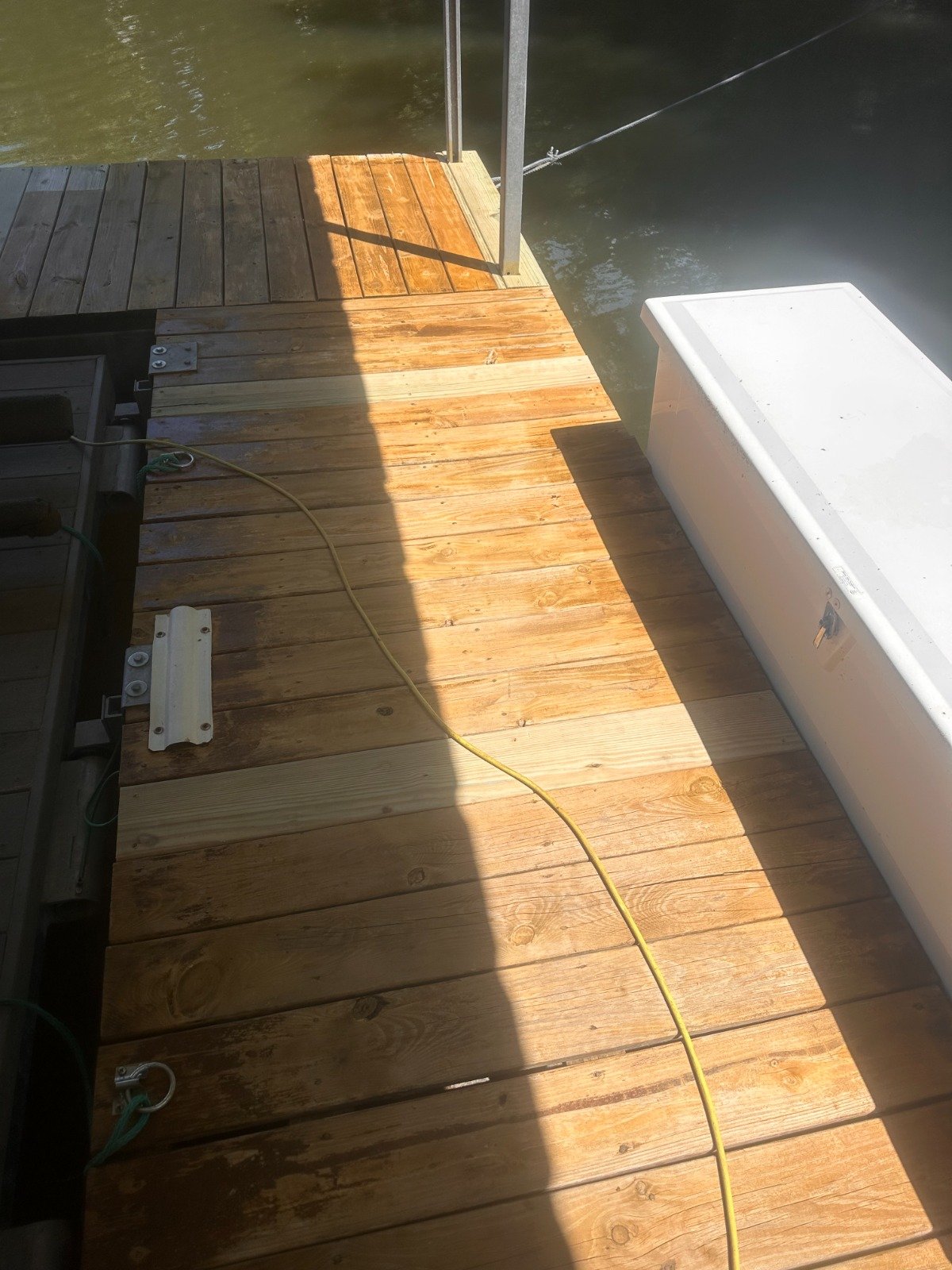
What a Clean Dock Roof Does for a Camdenton Lake Property

The visual transformation of a professionally cleaned dock roof on a wooded Camdenton cove property is among the most striking exterior cleaning results available — specifically because the before condition on these properties is often the most severe.

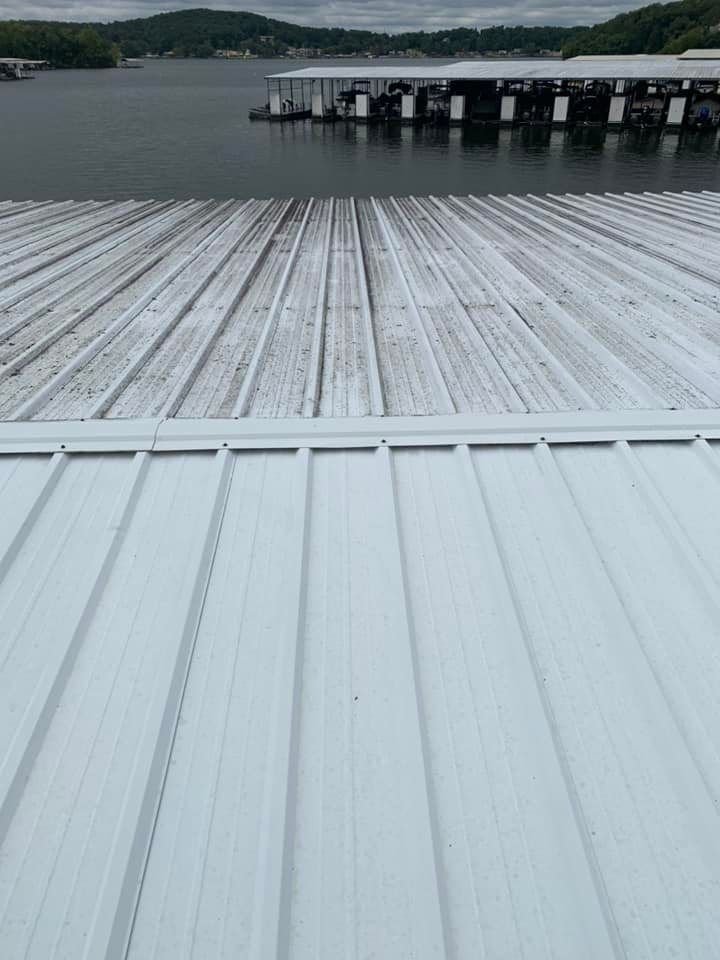
A Camdenton dock roof that’s been through multiple seasons without professional cleaning under a heavy tree canopy can be dark brown-black across most of its surface, with visible green algae at the edges and the characteristic mold streaking that runs from the ridge down to the eaves. The dock looks decades older than it is. The property looks like maintenance has been an afterthought.

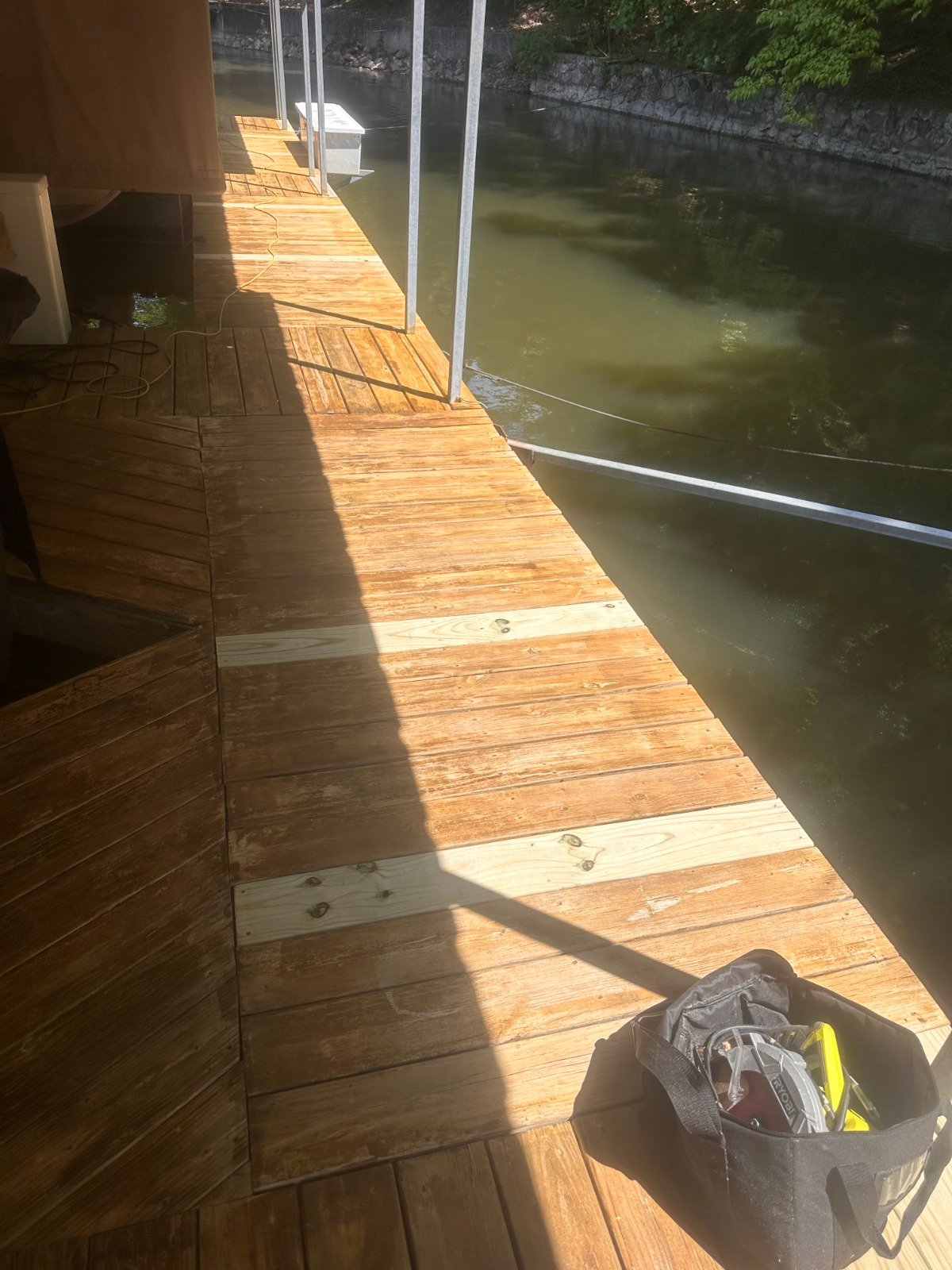
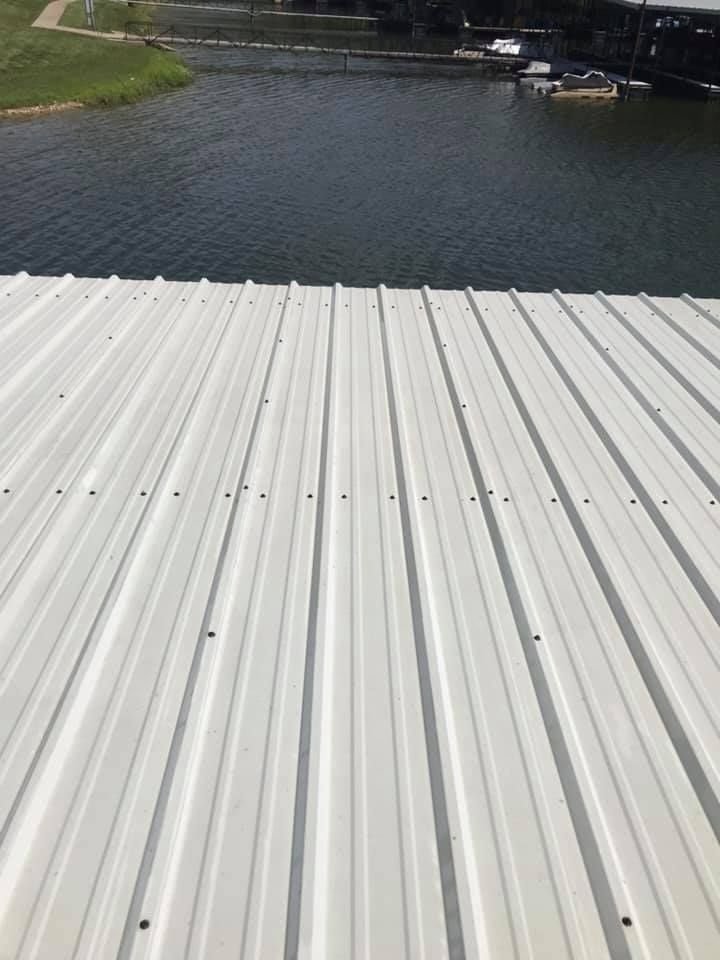
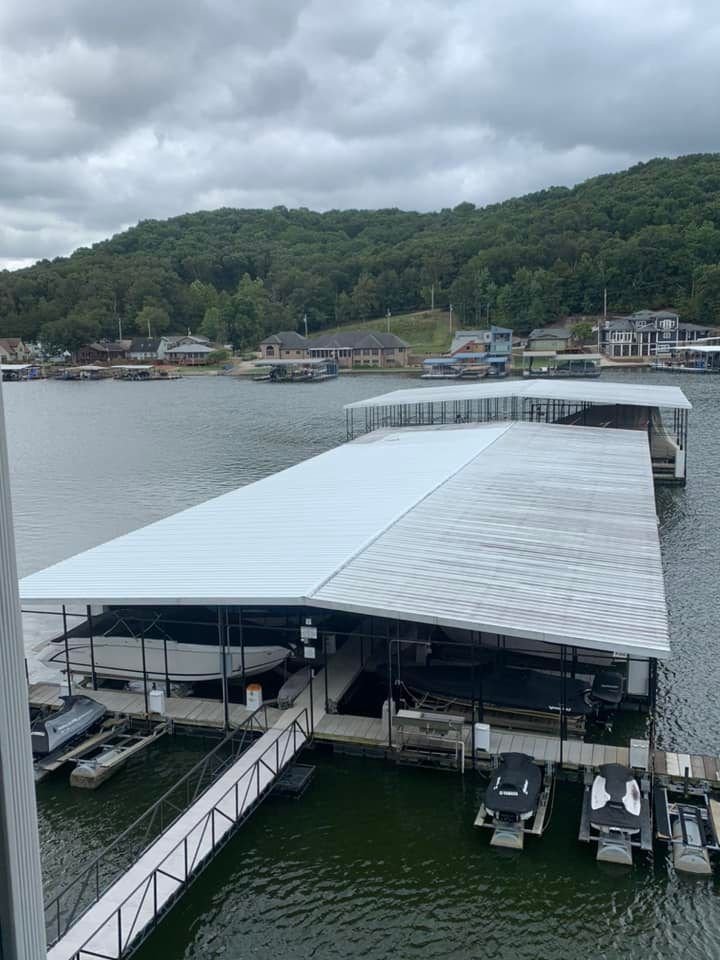
After a professional soft wash with debris clearing and biofilm treatment, the same roof is restored to something close to its original appearance — lighter, cleaner, and presenting the dock structure as the well-maintained feature it actually is. The property looks cared for. The sightline from the house to the water improves. And the dock surface below — no longer being continuously seeded with biological material dripping from above — maintains cleaner conditions longer between surface cleanings.

Frequently Asked Questions — Dock Roof Cleaning Camdenton MO

Do you serve wooded cove properties throughout Camden County for dock roof cleaning?
Yes. Camdenton and the surrounding Camden County communities — including cove properties along the Grand Glaize arm and throughout the area — are within our primary service area.
Our dock roof is completely black with mold. Can soft washing restore it?
In most cases, yes. Heavy mold staining — even on roofs that appear almost entirely dark — responds well to professional soft washing with the right cleaning chemistry. The degree of restoration depends on how deeply the biological growth has penetrated roofing materials and whether any permanent staining has occurred in the substrate. We assess the condition before cleaning and provide honest expectations about the likely result.
How does organic debris accumulation affect the dock roof cleaning process?
Significantly. On wooded Camdenton properties, organic debris accumulation on the roof surface needs to be cleared before soft washing for the cleaning chemistry to reach the roof surface and biological growth directly. Skipping debris clearing and applying chemistry over a thick organic layer produces inconsistent results that don’t represent the full value of a professional soft wash.
We close our Camdenton property in October. Should dock roof cleaning be done before or after closing?
Before closing is the right sequence — fall closing cleaning removes the accumulated biological growth of the full season before winter sets in, preventing the deep penetration into roofing materials and wood framing that an uncleaned winter produces. Spring opening cleaning is still recommended even with fall cleaning, because the freeze-thaw cycle through winter affects biological conditions on the roof regardless.
Can you combine dock roof cleaning with dock surface cleaning on a Camdenton property?
Yes — and this is the recommended approach. Dock roof cleaning followed by dock surface cleaning in the same visit is the most efficient method and ensures the roof cleaning chemistry and biological material doesn’t re-contaminate a freshly cleaned dock surface.
How much faster does mold return on a shaded Camdenton dock roof compared to a sun-exposed property?
Significantly faster — shaded dock roofs in wooded cove conditions can show visible biological growth regrowth within four to six weeks during peak summer conditions, compared to three to five months on well-exposed properties. Biofilm treatment during cleaning extends the clean period considerably even in these challenging conditions, but shaded Camdenton properties may still benefit from more frequent cleaning than the standard twice-yearly schedule.

Quick Contact

Camdenton’s Wooded Coves Deserve Dock Roofs That Actually Get Clean

The conditions that make Camdenton lake properties so appealing — the wooded lots, the quiet coves, the natural character of the Grand Glaize arm — are the same conditions that make dock roof cleaning here more demanding than anywhere else on the lake. My Handyman LOZ has been managing those conditions on Camden County properties since 1992. We know what it takes to get a heavily shaded, organically loaded Camdenton dock roof genuinely clean — and to keep it that way as long as possible in conditions that favor biological growth at every turn.