
By My Handyman LOZ | Serving Lake Ozark, Osage Beach, Camdenton, Sunrise Beach & Surrounding Lake Communities
Most lake homeowners think about dock cleaning once — usually right after they notice the green slick creeping across the boards, or worse, right after someone slips and grabs the railing for dear life. By then, the problem has been building for months.
Here at Lake of the Ozarks, where warm, humid summers and Missouri’s infamous algae growth combine into a relentless seasonal cycle, knowing how often to clean your dock isn’t just a maintenance question. It’s a safety question. It’s a liability question. And for vacation rental owners hosting guests from Memorial Day through Labor Day, it’s a reputation question.
This guide breaks it all down — honestly, practically, and with the kind of local knowledge that comes from maintaining docks and decks on this lake since 1992.
The Short Answer: At Least Twice a Year, Possibly More
If you want the quick version: most Lake of the Ozarks docks should be professionally cleaned at minimum twice per year — once in spring before the season opens, and once in fall before winter sets in.
But that’s the floor, not the ceiling.
Docks that sit in coves with heavy tree cover, docks attached to vacation rentals with high foot traffic, older docks with weathered wood, and any dock that’s north-facing or shaded for most of the day — these need more attention. Depending on your specific setup, quarterly cleaning may be the right call.
The factors that determine your dock’s cleaning schedule include:
- Sun exposure — Shaded docks grow algae dramatically faster than sun-drenched ones
- Surrounding vegetation — Trees and brush drop organic debris that feeds mold and mildew
- Water depth and flow — Shallow coves with minimal water movement encourage algae blooms
- Dock material — Older treated wood holds moisture longer than composite or aluminum surfaces
- Usage level — A vacation rental dock used by dozens of guests needs more frequent attention than a private dock used on weekends
What’s Actually Growing on Your Dock (And Why It Matters)
That green, black, or brownish film coating your dock isn’t just ugly. It’s a living layer of algae, mold, mildew, and biological growth that feeds on moisture, heat, and organic matter — and Lake of the Ozarks provides all three in abundance from May through September.
Here’s what you’re dealing with:
Green algae forms first, usually appearing as a slimy film on dock boards and dock roofs after sustained warm weather. It looks harmless. It isn’t.
Black algae and mildew follow. This darker growth penetrates wood fibers more aggressively and is significantly harder to remove once it gets established. On dock roofs and shaded surfaces, it can spread across the entire structure within a single season.
Biofilm is the invisible first stage of all of it — a microscopic layer of organisms that adheres to wet surfaces and creates the foundation for visible growth. Once biofilm establishes, everything else follows quickly.
The safety concern is immediate and serious. A dock board covered in wet algae can have the same slip resistance as ice. Guest after guest walks out there in bare feet, flip-flops, or wet swimsuits — and the physics are not forgiving. Slips on algae-covered docks result in broken wrists, cracked ribs, head injuries, and worse every single summer.
Spring Cleaning: Why Timing Matters More Than You Think
The best time to schedule your spring dock cleaning is April through early May — before lake traffic picks up and before algae growth accelerates with the rising water temperatures.
What most homeowners don’t realize is how fast conditions change. A dock that looked fine when you closed the lake house in October may be covered in mold and biological growth by the time you arrive Memorial Day weekend. The winter months are not dormant for organic growth — they’re just slower. Moisture, debris, and biological material have been accumulating on every surface since the last time it was cleaned.
Arriving at your lake home with family and guests ready to jump in the water, only to find your dock is a safety hazard, is a situation that plays out hundreds of times every spring on this lake.
A proper spring cleaning includes:
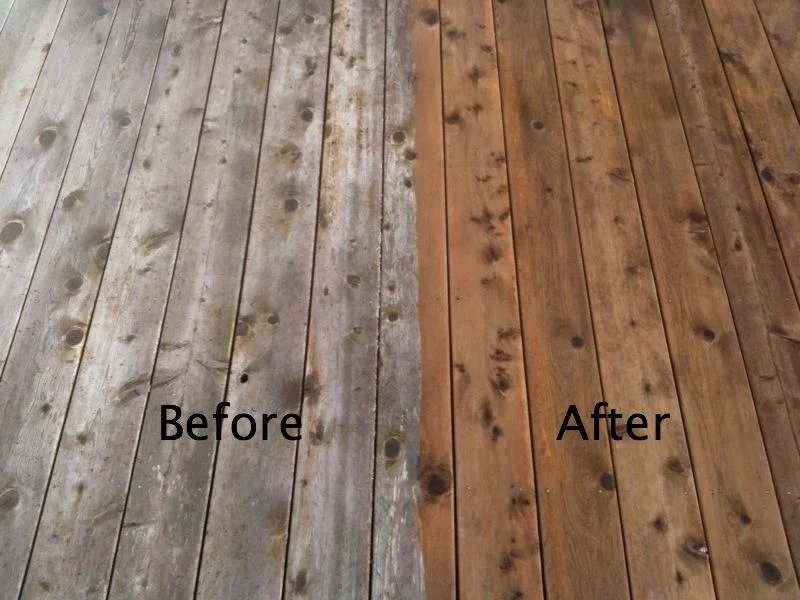
- Soft washing the dock surface to remove algae, mildew, and biofilm without damaging wood fibers
- Power washing concrete walkways and approach areas where slip hazards concentrate
- Cleaning dock roofs and overhangs where mold accumulates and drips down onto traffic areas
- Inspecting decking boards and railings for rot, looseness, or structural concerns while the surface is clean and visible
- Treating wood surfaces to slow the return of biological growth through the season
Fall Cleaning: Don’t Skip This One
Fall cleaning is the step most homeowners skip. They’re done with the season, they’re tired from a summer of entertaining, and the dock doesn’t look that bad. Why bother?
Because what you leave on your dock in October is what you’ll fight in April — but worse.
Leaves, organic debris, moisture, and the remnants of a full summer of biological growth sit on your dock surfaces for five to six months. Mold and mildew have all winter to work their way deeper into wood fibers. By spring, what could have been a routine cleaning becomes a restoration job.
Fall cleaning also protects your investment. Mold-saturated wood deteriorates faster. Boards that could have lasted another decade rot out in two or three years when they’re left wet and covered in biological material through a Missouri winter.
This is particularly important for deck staining and sealing. If your deck or dock wood needs a fresh coat of stain, fall cleaning preps the surface properly — and a stained, sealed surface resists biological growth and moisture damage dramatically better through the off-season.
Vacation Rental Owners: Your Dock Is Your First Impression
If you’re running a vacation rental on the lake — whether listed on Airbnb, VRBO, or direct booking — your dock is one of the first things guests walk toward with their phones out taking photos.
That image ends up on Instagram. It ends up in reviews. It ends up in the header photo of your listing page.
A green, stained, slippery dock doesn’t just create a safety liability — it tells guests something about how the property is maintained overall. Reviews mentioning “dirty dock” or “slippery walkway” don’t just cost you five-star ratings. They cost you bookings at the exact price points you’re trying to hold.
Vacation rental properties at Lake of the Ozarks should be scheduled for professional dock and deck cleaning at minimum three times per year — spring opening, midsummer, and fall close. High-traffic properties may benefit from monthly or bimonthly soft washing of the dock surface during peak season.
The math is simple: the cost of a professional cleaning is a rounding error compared to the revenue lost from a single one-star review or a guest injury claim.
The Right Cleaning Method for Lake Docks
Not all dock cleaning is the same, and using the wrong method can do more damage than the algae itself.
Pressure washing uses high-pressure water to blast surfaces clean. It’s effective on concrete, certain composite decking, and metal surfaces. On older treated wood or softer lumber, however, high-pressure washing can raise the wood grain, push water deeper into the material, and actually accelerate deterioration.
Soft washing uses lower water pressure combined with professional-grade cleaning solutions that kill algae, mold, and mildew at the root rather than just blasting the surface clean. For most dock wood at Lake of the Ozarks — particularly older treated lumber — soft washing is the right choice. It cleans more thoroughly and doesn’t damage the wood fibers in the process.
The difference matters. A dock that’s pressure washed incorrectly may look clean immediately afterward but will see algae return faster because the surface has been roughened, giving biological material more to grip. Soft washing with the right treatment slows regrowth significantly.
At My Handyman LOZ, we assess each dock individually before recommending a cleaning approach — because a dock that’s been in the water since 1995 needs a different treatment than composite decking installed two years ago.
What Happens When You Wait Too Long
Some homeowners push off dock cleaning for two, three, four years. It always feels like something else is more urgent.
Here’s what deferred maintenance looks like in practice:
Year one without cleaning: Algae film forms, surface begins staining. A thorough cleaning restores appearance completely.
Year two: Mold works into wood fibers. Surface staining becomes permanent in spots. Cleaning removes the biological growth, but some discoloration remains.
Year three: Wood rot begins in areas with persistent moisture and organic growth. Some boards may need replacement. What was a cleaning job is now a cleaning and repair job.
Year four and beyond: Structural integrity may be compromised. Rotted boards, weakened decking supports, railing posts loosened by wood rot at the base. Now you’re talking about significant repair costs — or full dock rehabilitation.
The cost difference between a routine annual cleaning and a deferred-maintenance repair project is not subtle. Catching problems early — during a cleaning, when boards and connections are visible and accessible — is always cheaper than addressing them after the rot has spread.
Signs Your Dock Needs Cleaning Now
Don’t wait for your scheduled maintenance window if you notice any of these:
- Green, brown, or black discoloration on dock boards or dock roof
- Soft or spongy feeling underfoot on any section of the dock
- Visible mold or dark streaking on wood surfaces
- White chalky deposits on dock posts or support structures
- Slippery or sticky texture on dock boards even when dry
- Peeling, cracking, or graying stain or sealant on deck surfaces
- Water staining visible on dock roof from above
Any one of these is a signal. More than one is a call to action.
Frequently Asked Questions
How often should I clean my lake dock at Lake of the Ozarks?
Most docks benefit from professional cleaning twice a year — spring and fall. Vacation rental properties and heavily shaded docks may need three to four cleanings annually. The right schedule depends on your dock’s age, material, sun exposure, and usage level.
Is it safe to power wash dock wood?
It depends on the wood and the pressure. High-pressure washing can damage older treated lumber by raising the grain and driving moisture deeper into the wood. Soft washing — lower pressure combined with professional cleaning solutions — is safer for most dock wood and more effective at preventing algae regrowth. We assess each dock before deciding the right approach.
Can algae really make a dock dangerous?
Absolutely. Wet algae on dock boards creates a surface with almost no slip resistance. Bare feet, flip-flops, and wet swimsuits on algae-covered wood is a serious fall hazard. This is one of the most common sources of dock-related injuries at the lake every summer.
How long does a professional dock cleaning take?
For most residential docks, a thorough cleaning takes two to four hours depending on size, condition, and the level of biological growth present. A dock that’s been neglected for several years may take longer.
What’s the best time of year to schedule dock cleaning at Lake of the Ozarks?
April is ideal for spring cleaning — before the season opens and before algae growth accelerates with warming water temperatures. October is the window for fall cleaning, before winter sets in and while the weather still cooperates for outdoor work.
Ready to Get Your Dock Summer-Ready?
My Handyman LOZ has been maintaining docks, decks, and lake properties at Lake of the Ozarks since 1992. We know this lake, we know the growth patterns, and we know what it takes to keep a dock clean, safe, and looking sharp for another season of family time and lake memories.
Don’t wait until Memorial Day weekend to find out your dock needs attention.
Call us at (573) 217-6060 or visit our Contact page to schedule your spring dock cleaning before our calendar fills up for the season.