
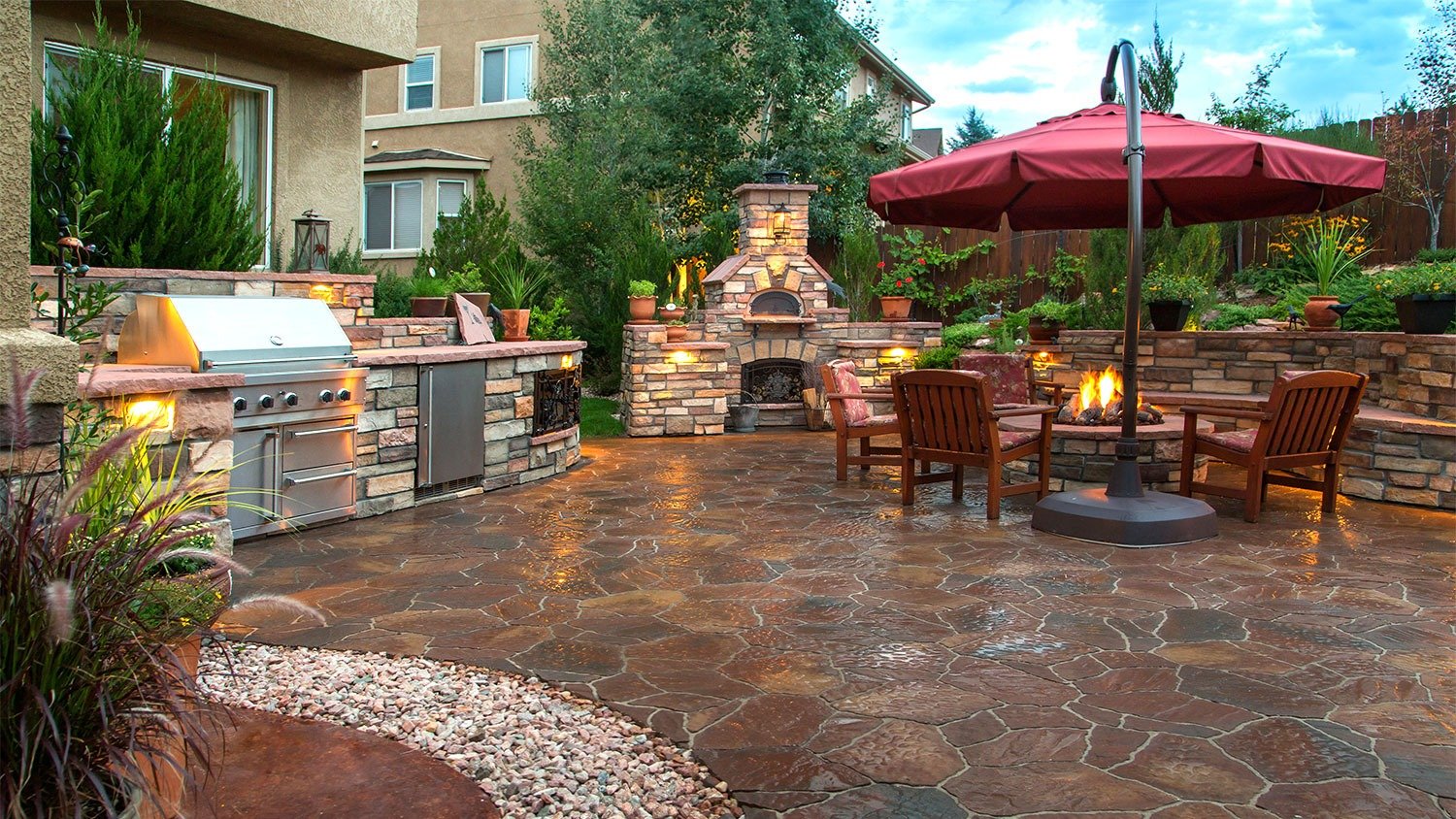
The Short Answer — And Why It Matters More Here Than Anywhere Else
Yes. Concrete sealing substantially reduces mold and algae growth on Lake of the Ozarks property surfaces. Not eliminates — the biological growth pressure from a Missouri lake environment is persistent enough that no surface treatment produces complete permanent immunity. But professional concrete sealing, applied correctly to a properly cleaned and prepared surface, meaningfully slows the rate at which algae and mold establish and advance on concrete driveways, walkways, dock approaches, and other concrete surfaces at lake properties.
That “meaningfully slows” matters more at Lake of the Ozarks than it would at an inland property — because the combination of persistent humidity from the lake, warm Missouri summers, organic debris from surrounding vegetation, and low-circulation conditions in sheltered cove positions creates biological growth pressure on outdoor concrete surfaces that’s more aggressive here than most homeowners coming from drier environments have experienced.
Concrete at a Lake of the Ozarks property that isn’t sealed doesn’t just look worse than sealed concrete. It accumulates biological growth faster, retains moisture longer between drying events, develops the slip-hazard algae film that creates injury risk on walkways and dock approaches, and absorbs the organic acids that biological growth produces — acids that chemically attack the cement paste and advance the surface deterioration that eventually requires resurfacing or replacement.
My Handyman LOZ has been cleaning, caulking, and sealing concrete throughout Lake Ozark, Osage Beach, Camdenton, Sunrise Beach, Laurie, Four Seasons, Porto Cima, Linn Creek, Eldon, and the surrounding communities since 1992. This article answers the concrete sealing question comprehensively — how sealing affects biological growth, why lake conditions make it particularly important, and what the right process looks like.
**📞 Call (573) 217-6060 | Text Photos for a Fast Estimate**
Why Mold and Algae Grow on Concrete in the First Place
Before explaining how sealing addresses the problem, it helps to understand what makes concrete hospitable to biological growth — because the mechanism that concrete sealing interrupts is the mechanism that needs to be understood.
Concrete Is Porous
Concrete looks solid and impervious — but at the microscopic level, it’s a porous material full of capillary channels that absorb and hold water. These pores form during the curing process as water from the concrete mix evaporates, leaving void space in the hardened material. The pore structure of concrete is what allows it to absorb water, and the water it absorbs is what creates the sustained moisture conditions that biological growth needs.
At Lake of the Ozarks, concrete surfaces absorb moisture from multiple simultaneous sources: rain and dew from above, humidity from the lake environment at the surface level, and in some cases ground moisture from below through the slab. The concrete’s pore structure keeps it at elevated moisture content for extended periods after each moisture input event — particularly on shaded surfaces that don’t benefit from sun drying.
Biological Growth Needs Three Things — Concrete Provides All of Them
**Moisture** — provided by the concrete’s pore structure holding lake humidity and precipitation.
**Organic nutrients** — provided by the pollen, leaf debris, and organic material that accumulates on concrete surfaces at lake properties and decays there, feeding the biological growth cycle.
**A surface to attach to** — provided by the concrete surface itself, where the rough texture of concrete provides physical anchorage for algae and mold organisms, and where the pore openings provide entry points for biological growth to establish in the substrate itself rather than just on the surface.
Remove any one of these three conditions and biological growth is slowed. Concrete sealing primarily addresses the moisture condition — filling the pore structure that makes concrete hygroscopic and reducing the moisture absorption that sustains biological growth.
How Concrete Sealing Reduces Mold and Algae Growth
The Pore-Filling Mechanism
Penetrating concrete sealers work by infiltrating the concrete’s pore structure and polymerizing within it — essentially filling the microscopic channels that would otherwise absorb water with a hydrophobic (water-repelling) material. Once the pore structure is occupied by the sealer’s polymers, the concrete’s water absorption is dramatically reduced.
Less water in the concrete pore structure means:
- **Less sustained surface moisture** — sealed concrete dries faster between rain, dew, and humidity events than unsealed concrete. The biological growth that needs sustained moisture to establish and advance is operating on a drier surface between wet events.
- **Less capillary draw of moisture to the surface** — unsealed concrete actively draws moisture toward its surface through capillary action as surface moisture evaporates. Sealed concrete’s occupied pore structure reduces this capillary draw, limiting the surface moisture that would otherwise be continuously replenished from below.
- **Less hospitable pore structure for biological establishment** — some algae and mold organisms establish in the concrete’s pore structure itself, not just on the surface. Sealed pores limit the biological establishment pathway into the substrate.
The Surface Chemistry Effect
Beyond the pore-filling mechanism, quality concrete sealers alter the surface chemistry of the concrete in ways that make biological attachment more difficult. Biological organisms — algae, mold, biofilm — attach to surfaces through adhesion mechanisms that are influenced by surface chemistry. A hydrophobic sealed surface is chemically less hospitable to biological adhesion than the hydrophilic surface chemistry of unsealed concrete.
This effect isn’t as dramatic as the moisture reduction benefit, but it contributes to the overall biological growth resistance that sealed concrete demonstrates compared to unsealed concrete in the same environment.
What “Meaningfully Slows” Looks Like in Practice
The practical difference between sealed and unsealed concrete at Lake of the Ozarks in terms of biological growth accumulation is measurable in weeks and months. Unsealed concrete in a shaded, humid lake environment can develop visible algae film within four to eight weeks during peak biological growth season. Properly sealed concrete in the same position typically takes two to three times longer to reach the same visible growth level.
Over a full season, that difference means:
- Sealed concrete maintains an acceptable appearance longer between professional cleaning services
- The algae slip hazard on sealed concrete walkways takes longer to develop than on unsealed surfaces
- The organic acid attack on sealed concrete from biological growth proceeds more slowly, protecting the concrete surface
- The overall maintenance cleaning frequency needed to keep sealed concrete in safe, clean condition is lower than for unsealed concrete in the same position
For Lake of the Ozarks homeowners who’ve been pressure washing their driveway and walkways every spring only to have them look dark with biological growth by July — concrete sealing is the service that extends the acceptable appearance window significantly past what cleaning alone delivers.
The Critical Requirement: Cleaning Before Sealing
This point deserves direct, emphatic statement: concrete sealing applied over biological growth, organic staining, or surface contamination does not provide effective mold and algae resistance. It seals the contamination in.
Sealer bonds to the concrete surface — which means it needs to bond to clean concrete, not to the algae film, mold staining, organic debris, or dirt that covers the concrete surface between professional cleanings. Sealer applied over a contaminated surface:
- Bonds to the contamination layer rather than the concrete
- Provides no meaningful biological growth resistance because the organisms it would need to prevent are already beneath it
- Fails prematurely as the contamination layer it bonded to degrades beneath it
- May trap moisture beneath the sealed layer in some circumstances, creating conditions that can damage the concrete
**The correct sequence is non-negotiable:**
- Professional pressure washing removes embedded staining, biological growth, organic debris, and surface contamination down to clean concrete
- Adequate drying time — typically 24 to 48 hours in good weather conditions — allows the cleaned concrete to reach the moisture content at which sealer bonds and cures correctly
- Any caulking of failed joints or significant cracks before sealer application (joints are moisture infiltration points that sealer alone doesn’t waterproof)
- Sealer application to clean, dry, properly prepared concrete
Every step matters. Sealing over wet concrete produces a bond that fails faster than sealing over dry concrete. Sealing without caulking joints leaves the most significant moisture infiltration pathways open. Sealing without cleaning produces no meaningful biological growth benefit.
Why Lake Properties Benefit More From Concrete Sealing Than Inland Properties
The biological growth benefit of concrete sealing is present at any property where biological growth on concrete surfaces is an issue. But the magnitude of that benefit is greater at Lake of the Ozarks properties than at inland properties — because the biological growth pressure that sealing is working against is more aggressive here.
**The lake humidity baseline.** Concrete at a lake property maintains higher average moisture content through the warm season than concrete at an inland property with comparable rainfall — because the elevated relative humidity from the lake surface is continuously adding moisture to the concrete’s surface and near-surface pore zone. Sealing that reduces moisture absorption at the pore level is working against a higher moisture pressure at the lake than inland.
**The extended biological growth season.** Warm lake water temperatures that persist through September and early October extend the active biological growth season on lake property concrete surfaces compared to surfaces at inland locations where ambient temperatures limit biological activity earlier in fall. More active growth season means more accumulation per unsealed period.
**The organic debris load.** Lake properties — particularly those with tree canopy and shoreline vegetation throughout Camdenton, Sunrise Beach, Laurie, and the surrounding wooded areas — receive significantly higher organic debris loads than inland properties. That debris feeds the biological growth cycle and contributes to the nutrient availability that sustains algae and mold on concrete surfaces between rain events.
**The proximity-to-water factor.** Dock approach areas and boat ramp concrete surfaces are in direct spray and splash contact with lake water through the boating season — which includes the algae, mold spores, and biological material the lake carries. This direct biological inoculation of concrete surfaces near the water creates establishment conditions that sealed concrete resists more effectively than unsealed.
Specific Concrete Surfaces That Most Benefit From Sealing at Lake Properties
Not all concrete at a Lake of the Ozarks property faces the same biological growth conditions or the same benefit from sealing. Here’s a practical assessment of the surfaces where sealing delivers its highest value:
Dock Approach and Boat Ramp Areas
The concrete immediately around dock access — the ramp, the approach, the staging area near the dock entry — is the highest-priority sealing surface at most lake properties. These surfaces are in direct contact with lake water, receive the highest foot traffic, and carry the most concentrated slip hazard from biological growth. Sealed surfaces in this location resist the biological growth that creates the most dangerous slip conditions faster than any other concrete surface on the property.
Shaded Walkways and Approach Paths
Shaded concrete walkways between the parking area, the house, and the dock are the surfaces where biological growth accumulates most aggressively — the combination of limited sun drying and continuous humidity from the lake creates the most hospitable conditions for algae establishment. Sealing these surfaces extends the period before the slip hazard develops and reduces the cleaning frequency needed to keep them safe.
Driveways — Particularly Shaded Sections
Driveway surfaces on wooded lake lots that receive limited sun in their shaded sections develop algae growth that sealed surfaces resist more effectively than unsealed ones. The full driveway benefits from sealing, with the most pronounced benefit in the shaded sections that are otherwise the most difficult to keep clean.
Retaining Walls
Concrete block and poured concrete retaining walls on lake lots benefit from sealing on both moisture management and biological growth grounds — sealed wall faces resist the biological establishment that makes retaining walls look neglected and that produces the organic acid attack on the masonry surface that accelerates long-term deterioration.
Pool Decks and Outdoor Living Concrete
For Lake of the Ozarks properties with pool decks or outdoor entertaining concrete areas, biological growth on these surfaces creates both the slip hazard and the appearance issues that sealed surfaces resist significantly better than unsealed ones.
How Long Does Concrete Sealing Last at a Lake Property?
This is the question that determines whether concrete sealing is a one-time solution or a periodic maintenance commitment — and the honest answer is that it’s periodic maintenance.
Quality penetrating concrete sealers on properly prepared surfaces at Lake of the Ozarks properties typically provide meaningful biological growth resistance and moisture protection for two to four years, depending on:
- **Traffic level** — high-traffic driveway surfaces experience sealer wear faster than lower-traffic walkways
- **Sun exposure** — UV exposure degrades sealer polymer chemistry over time; south and west-facing surfaces may need resealing at the lower end of the range
- **Cleaning frequency** — professional cleaning that’s required to maintain the surface also gradually removes some sealer from the surface layer, while paradoxically being necessary to maintain the clean surface the sealer is protecting
**Signs that resealing is warranted:**
- Water no longer beads on the concrete surface and instead soaks in
- Biological growth returns to visible levels more quickly than in previous post-sealing periods
- The surface feels more absorptive than immediately after the last sealing application
- Annual cleaning reveals that the concrete is as stained as unsealed concrete would be
Annual professional cleaning is recommended regardless of sealing status — and that cleaning visit is the right time to assess whether the sealed surface is still providing adequate moisture resistance and biological growth protection, or whether resealing in that season is warranted.
Concrete Sealing and the Safety Benefit for Vacation Rental Properties
For vacation rental owners at Osage Beach, Lake Ozark, Four Seasons, and throughout the lake, the biological growth resistance that concrete sealing provides has a direct safety benefit alongside its maintenance benefit.
Algae on a concrete walkway creates a slip hazard for guests who are arriving or departing with luggage, who are walking to the dock in wet swimwear, or who are navigating the property at dawn or dusk when lighting is limited. The sealed concrete surface that resists biological growth establishment for longer between cleaning services is a safer surface for those guests through more of the booking season.
The maintenance record that includes concrete sealing — documented as part of a consistent professional maintenance program — is part of the property owner’s evidence of reasonable care if a guest injury claim ever arises. “We had the concrete professionally cleaned and sealed” is a demonstrably better position than “we pressure-washed it a few years ago.”
Frequently Asked Questions — Concrete Sealing and Biological Growth at Lake of the Ozarks
01. Does concrete sealing completely prevent mold and algae, or just slow it down?
It slows biological growth substantially — it doesn’t eliminate it permanently. The biological growth pressure from Lake of the Ozarks’ humid, warm environment is persistent enough that even well-sealed concrete will eventually develop some surface growth between cleaning cycles. The benefit is that sealed concrete takes significantly longer to reach the same visible growth level that unsealed concrete reaches quickly — extending the clean appearance window and the period before the slip hazard returns.
02. How soon after cleaning can concrete be sealed?
Typically 24 to 48 hours after professional pressure washing in good weather conditions — enough time for the cleaned concrete to reach the moisture content at which sealer bonds and cures correctly. In humid lake conditions or during rainy periods, this drying window may need to extend longer. Applying sealer before the concrete is adequately dry produces a bond that fails faster than sealer on properly dried concrete.
03. Does concrete sealing make the surface slippery?
Quality exterior concrete sealers designed for horizontal surfaces — driveways, walkways, dock approaches — are formulated to maintain slip resistance. Film-forming sealers applied in excessive thickness can create a slippery surface; penetrating sealers that absorb into the concrete pore structure don’t create this concern. My Handyman LOZ uses products appropriate for exterior horizontal applications where maintaining slip resistance is a safety requirement.
04. Should I seal all concrete on my lake property or just specific areas?
All concrete surfaces benefit from sealing, but the priority surfaces are those with the most aggressive biological growth conditions — shaded walkways, dock approach areas, boat ramp surfaces, and any concrete that stays damp for extended periods. If budget requires prioritization, seal the surfaces where biological growth creates the most significant slip hazard and the most prominent appearance problem first.
05. How does concrete sealing work with concrete caulking?
Caulking and sealing address different aspects of concrete protection — caulking waterproofs joints and cracks that sealing doesn’t fully protect, while sealing provides surface moisture resistance and biological growth resistance across the full slab. For comprehensive protection, caulking of failed joints should precede sealing — the caulk fills the infiltration pathways at joints before sealer is applied to the surface. My Handyman LOZ performs caulking assessment and application as part of every concrete sealing project.
06.Is spring or fall the better time to seal concrete at a Lake of the Ozarks property?*
Both windows work — the key requirement is that the surface is clean, dry, and above the minimum application temperature for the sealer product. Spring sealing applies protection before the season’s biological growth begins accelerating in warm conditions. Fall sealing applies protection before winter’s freeze-thaw cycling begins working on the moisture in the concrete pore structure. For complete annual protection, fall sealing after the season’s last professional cleaning is the timing that provides both biological growth and freeze-thaw protection through the off-season.
Sealing Is the Step That Makes Cleaning Last Longer
The homeowners who achieve the most consistent results on Lake of the Ozarks concrete surfaces aren’t the ones who clean most aggressively. They’re the ones who clean correctly and then seal — protecting the cleaned surface so it holds its clean condition longer before the next cleaning is needed.
My Handyman LOZ handles the complete concrete maintenance sequence: professional pressure washing to clean concrete properly, caulking assessment and application at failed joints and cracks, and quality sealer applied to properly dried and prepared surfaces. The result is concrete that looks better, stays better longer, and requires less frequent maintenance to keep in safe, presentable condition.
**📞 Call (573) 217-6060**
**📱 Text Photos for a Fast Estimate**
**🌐 Schedule Your Concrete Cleaning and Sealing — Contact Page**
*Serving Lake Ozark, Osage Beach, Camdenton, Sunrise Beach, Laurie, Four Seasons, Porto Cima, Linn Creek, Eldon, and the surrounding Lake of the Ozarks communities since 1992.*