
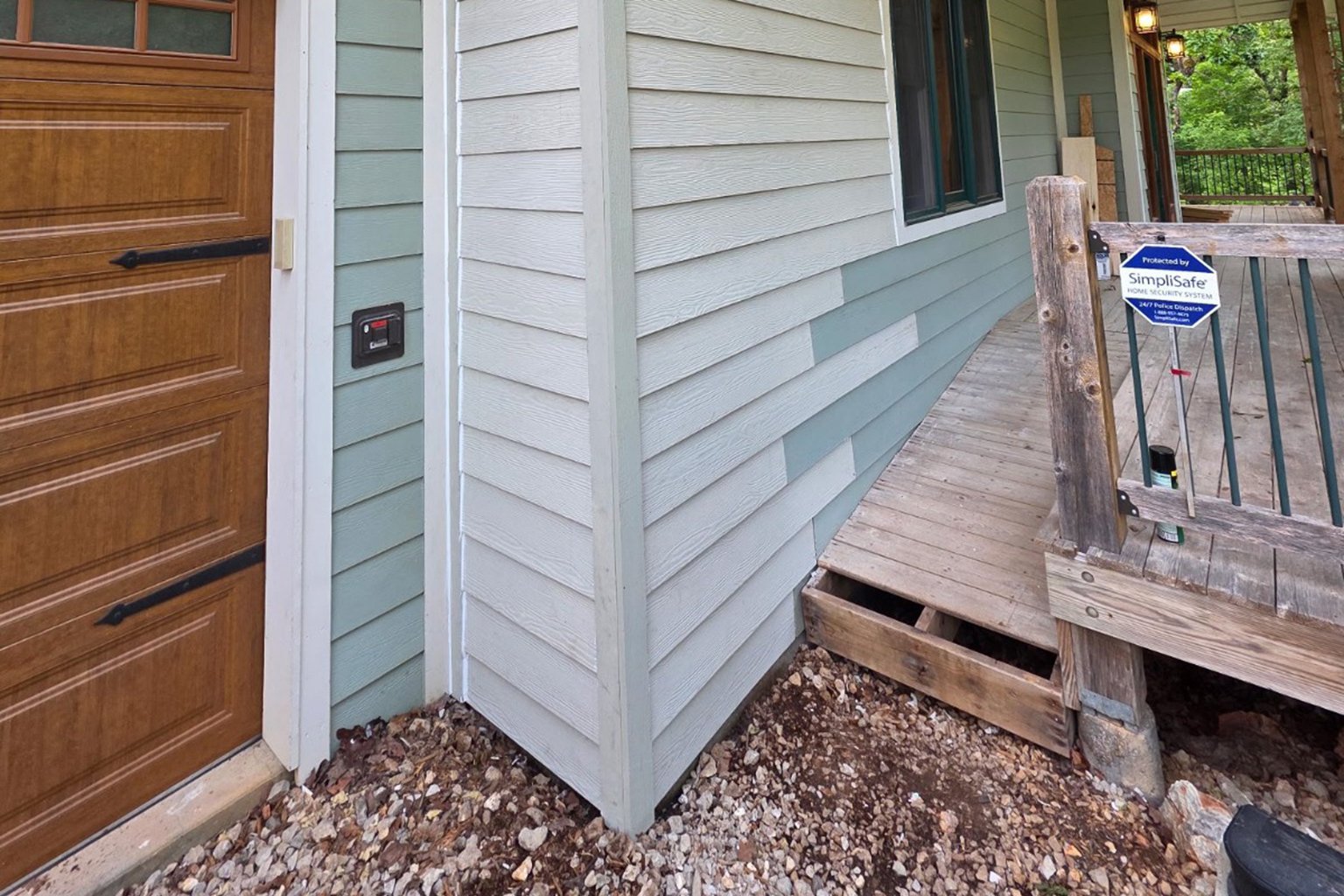
What “I’ll Get to It Next Season” Actually Costs
Every lake homeowner has a version of it. The dock board that felt a little soft last May. The deck staining that got pushed from spring to fall and then to next spring. The concrete walkway with the algae film that keeps getting pressure-washed off the priority list. The dock roof that’s been dark with mold for two seasons but still looks structurally fine.
None of these feel urgent in isolation. The property is still usable. The season is underway. There are other things to spend money on. Maintenance can wait.
Except it can’t — not at Lake of the Ozarks, and not without a cost. The cost just gets collected later, in larger amounts, from a problem that had months or years to compound between when it was identified and when it was finally addressed.
My Handyman LOZ has been maintaining lake properties throughout Lake Ozark, Osage Beach, Camdenton, Sunrise Beach, Laurie, Four Seasons, Porto Cima, Linn Creek, Eldon, and the surrounding communities since 1992. In that time, we’ve seen what deferred maintenance produces at every stage of the compounding cycle. This article puts specific numbers and real sequences to what those deferrals actually cost — and what the consistent maintenance that prevents them actually costs. The comparison is not close.
**📞 Call (573) 217-6060 | Text Photos for a Fast Estimate**
Why Deferred Maintenance Compounds Faster at the Lake
Before getting to the numbers, it helps to understand why the Lake of the Ozarks environment makes deferred maintenance more expensive than deferred maintenance at a primary residence in a drier, less biologically active location.
**Biological deterioration never pauses.** Mold consuming wood fiber, algae establishing on dock surfaces, biological growth advancing into concrete pores — all of this continues through every warm month without interruption. A dock board that’s started deteriorating in May doesn’t hold at its current level of deterioration until the owner decides to address it. It keeps advancing through June, July, August, September, and October. Then it goes into winter with the biological load of a full season built up, advances more slowly through the cold months, and picks up the pace again in spring. The deterioration that cleaning or targeted replacement could have interrupted six months ago has been running uninterrupted.
**One failure creates the conditions for adjacent failures.** A rotting dock board creates the sustained moisture and biological conditions that affect the boards immediately beside it. A failed paint film allows moisture into wood substrate that creates mold conditions beneath the siding. A cracked concrete joint lets water into the base material that accelerates freeze-thaw damage through the entire adjacent slab. Problems at Lake of the Ozarks don’t stay the size they started.
**Seasonal closures provide unobserved advancement windows.** Many Lake of the Ozarks properties close in October and reopen in May. The seven months between closing and opening are seven months of unobserved deterioration. A problem that was catching-up-on-the-list at closing has been advancing at full pace through an entire Missouri winter. Spring arrival reveals not the problem that was there in October — it reveals that problem plus seven months of progress.
**The repair cost curve is not linear.** The relationship between how long a problem is deferred and how much it costs to fix is not a straight line — it’s a curve that accelerates. A soft dock board deferred one season produces a modest cost increase. Deferred two seasons, the adjacent boards are involved and the joist below needs attention. Deferred three seasons, the section rehabilitation includes structural work that a single board replacement never would have required.
The Dock Board Deferral — A Real Cost Sequence
This is the most common deferred maintenance scenario at Lake of the Ozarks, and the one that illustrates the compounding cost curve most clearly.
**The situation:** A homeowner notices a soft dock board during the season. It’s not dramatically soft — just a slight give underfoot that wasn’t there last year. They note it, plan to get it addressed in fall, and the fall closing comes and goes without the repair being scheduled. Spring opening reveals the board is softer now. They plan to get it done that summer. Summer passes. Another fall closing. Another spring opening.
**The cost at each intervention point:**
**Season one — single board replacement:**
One soft board, early-stage rot, joist beneath it still sound. Single board replacement, end-cut preservative treatment, appropriate fasteners. Straightforward scope. Modest cost. Total repair scope: one board.
**Season two — three-board section repair:**
The rot has spread to both adjacent boards. The joist beneath the original board shows the beginning of moisture penetration at the bearing point and needs treatment. Section replacement of three boards plus joist treatment and hardware inspection throughout the section. Cost is approximately three to four times the season-one scope.
**Season three — section rehabilitation with structural work:**
Rot has advanced to five boards, the joist beneath the original board is structurally compromised and needs replacement, and the fastener hardware in the affected section has corroded enough that connection integrity across the section is a concern. Section rehabilitation with joist replacement. Cost is approximately eight to twelve times the original single board scope.
**Season four and beyond — dock rehabilitation:**
If structural failure has occurred or if the deterioration has advanced to multiple sections and multiple structural members, the project has moved from targeted repair into comprehensive rehabilitation. This is where homeowners are making decisions about dock rehabilitation versus dock replacement — a conversation that a single well-timed board replacement would have prevented for a decade or more.
The number that matters: the homeowner who replaces a single board when it first shows structural compromise spends a fraction of what the homeowner who defers the same repair through three seasons spends. Both own the same dock. One made a maintenance decision. The other made a series of deferral decisions that produced a compounding cost outcome.
The Deck Staining Deferral — What Two Missed Seasons Cost
Deck staining is the deferred maintenance that most consistently produces the outcome of spending more money for a worse result — because the work that should have been a clean stain application becomes a restoration project that costs more and produces less.
**The correct sequence:** Professional cleaning → structural assessment → any needed board replacement → adequate lumber drying → stain application. On a properly prepared surface, a quality penetrating stain lasts three to five seasons at Lake of the Ozarks before reapplication is warranted.
**What happens when staining is deferred:**
**One season beyond the right window:**
The existing stain has failed significantly on the high-UV and high-moisture sections. Bare wood has been directly absorbing lake humidity and UV exposure for one season without protection. Biological growth has established in the grain of the unprotected wood surface. Professional cleaning, surface assessment, and restaining is straightforward — but the stain that could have been applied to properly maintained wood is now going onto wood that’s begun the biological growth cycle that accelerates the next stain failure.
**Two seasons beyond the right window:**
Biological growth has penetrated significantly into the wood grain on unprotected surfaces. Some boards that were sound at the original staining window may now show early soft spots. Surface preparation for restaining requires more aggressive cleaning, potentially some board replacement, and longer prep time before staining can proceed. The project cost is meaningfully higher than a properly timed restain would have been.
**Three or more seasons beyond the right window:**
The deck that should have been restained three years ago may now need professional cleaning to reveal board condition, board replacement in the most deteriorated sections, full surface preparation, and then staining — a project whose scope and cost bears little resemblance to the maintenance staining that would have been appropriate three years prior. The stain job that was a maintenance expense has become a restoration project.
The specific cost multiplier varies by deck size, material condition, and the specific deterioration that accumulated through the deferral window. But the direction is always the same: deferred staining consistently costs more than timely staining, produces a result on more deteriorated wood, and starts the next stain cycle from a compromised rather than a protected baseline.
The Concrete Cleaning and Sealing Deferral
Concrete maintenance is the deferred maintenance category that produces the most irreversible results — because once freeze-thaw cycling has damaged concrete substrate significantly, cleaning and sealing addresses the surface condition but doesn’t reverse the structural damage.
**The situation:** A Lake of the Ozarks homeowner knows the driveway and walkways should be cleaned and sealed. It gets pushed each spring — not urgent enough to prioritize over the dock and deck work that feels more immediate.
**What deferred concrete maintenance produces:**
**Year one without cleaning and sealing:**
Algae and organic staining accumulate on the surface. The biological acid production from algae and mold begins chemically attacking the cement paste at the concrete surface. Freeze-thaw cycling through winter works on the moisture that’s been absorbed into unprotected pores through the humid lake season. Surface pitting begins — barely visible, but measurably present.
**Years two and three:**
Surface pitting has advanced to visible roughening. The rougher surface holds more organic debris and moisture, accelerating the biological growth and acid attack cycle. Freeze-thaw damage has opened surface micro-cracks that allow more significant moisture infiltration. Cleaning at this stage still improves appearance significantly, but some surface deterioration is permanent.
**Years four and five:**
Surface spalling — the flaking and pitting of the concrete surface layer — is visible. Cracks have developed or widened at joints and across slab faces. The concrete that would have sealed cleanly three years ago now requires crack repair and caulking before sealing, and the sealer is being applied to a surface that has already lost structural integrity in the most damaged areas.
**Beyond five years without maintenance:**
Significant concrete deterioration. Some sections may require resurfacing or replacement rather than cleaning and sealing. What was a cleaning and sealing maintenance project is now a concrete repair or replacement conversation.
The cost of cleaning and sealing Lake of the Ozarks concrete annually is a fraction of the concrete repair or replacement cost that sustained deterioration eventually produces. The damage from missing three or four annual maintenance cycles is not recoverable through cleaning and sealing alone.
The Vacation Rental Maintenance Deferral — Revenue Math
For vacation rental investors at Lake Ozark, Osage Beach, and Four Seasons, deferred exterior maintenance has a revenue impact that compounds alongside the structural impact. The cost calculation for STR operators is more immediate and more quantifiable than for private homeowners.
**The review impact of deferred maintenance:**
A Lake of the Ozarks vacation rental property with a dock that hasn’t been professionally cleaned, a deck that’s overdue for staining, and concrete walkways with algae film is a property that’s going to generate maintenance-related review language. “Dock was slippery,” “outdoor areas looked neglected,” “not as described” — these are the review phrases that suppress booking rates and require rate reductions to maintain occupancy.
A single three-star review citing exterior maintenance on a Lake Ozark or Osage Beach rental property generating $500 per night means that review is potentially responsible for every booking that chose a competitor after reading it. Even conservatively estimating that one review affects two bookings per season, the lost revenue from one three-star maintenance review is $2,000 to $4,000 in a single season.
**The liability impact of deferred maintenance:**
A guest injury on a deferred-maintenance dock — the slippery algae surface, the soft board, the railing post that failed under load — creates legal and financial exposure that dwarfs the maintenance cost of the condition that caused it. Beyond the direct financial consequences, the reputational damage from a documented guest injury on a poorly maintained property affects the listing’s ability to operate at the rates and volumes that justify the investment.
**The maintenance cost comparison:**
A complete annual exterior maintenance program for a Lake of the Ozarks vacation rental property — spring dock and deck cleaning, concrete cleaning, structural inspection, minor repairs, and fall close — costs a predictable, manageable amount each season. That cost, spread across the bookings the property generates, is a small percentage of seasonal revenue.
The cost of a three-star review’s revenue impact, or of a guest injury’s legal and financial exposure, or of the structural repairs that deferred maintenance eventually produces — all of these are multiples of the annual maintenance program cost. The investors who recognize this and fund maintenance accordingly consistently hold the strongest review records and the highest sustainable booking rates on the lake.
The House Exterior Washing Deferral — Paint Life Math
For Lake of the Ozarks homeowners with painted wood siding and trim, the cost of deferred exterior washing is ultimately measured in paint life — because annual washing that prevents biological growth from establishing beneath the paint film is the primary determinant of how long the paint investment holds.
**A typical exterior paint investment** on a Lake of the Ozarks home with painted wood siding, trim, fascia, and architectural details represents a significant project cost — materials, labor, surface preparation, and the disruption of having a painting crew on the property.
**With annual professional washing:**
Biological growth is removed before it establishes beneath the paint film. UV oxidation is cleared before it compromises the paint surface layer. The paint maintains its protective bond to the substrate. The paint job lasts at or near its expected service life.
**Without annual washing:**
Mold establishes beneath the paint film on the highest-moisture surfaces within two to three seasons. The paint blisters and peels from below in the affected areas — not because the paint reached the end of its service life, but because the biological growth beneath it disrupted the adhesion bond. The areas of paint failure need to be stripped to bare wood, treated for mold, primed, and repainted — before those areas have reached anywhere near the end of normal paint life.
The cost of annual exterior washing — multiplied across the years between paint applications — is a fraction of the early repainting cost that mold-compromised paint adhesion produces. The math is straightforward and consistently favors the maintenance investment.
The Consistent Maintenance Cost — What It Actually Is
The deferred maintenance scenarios above are compelling in isolation. They become most useful when compared against what consistent, proactive maintenance actually costs.
**A complete annual maintenance program for a Lake of the Ozarks lake home** — professional dock cleaning including dock roof, deck cleaning, home exterior soft washing, concrete cleaning, and a structural inspection of dock and deck — is a predictable annual investment that prevents the compounding cost cycles described above.
**For vacation rental investors** — the same annual maintenance program, multiplied by the revenue protection value of the five-star reviews it sustains and the liability protection value of the documented maintenance record it creates, has a return on investment that few other property expenses match.
**The comparison that matters:**
The homeowner who catches a single dock board at season one spends a fraction of what the homeowner who defers to season three spends on the same original problem. The deck that gets cleaned and stained on schedule delivers years more service life than the deck whose staining gets pushed two seasons past the right window. The concrete that gets cleaned and sealed annually reaches the end of its service life on a normal timeline; the concrete that goes four or five years without maintenance may require repair or replacement before that timeline would have been reached.
Consistent maintenance is not just cheaper than deferred maintenance. It produces better results, longer-lived structures, safer properties, and — for vacation rental operators — stronger review records and higher sustainable revenue. The case for maintaining consistently rather than deferring strategically is compelling at every level of the analysis.
A Practical Maintenance Calendar to Avoid Deferred Costs
The most effective way to prevent the compounding cost cycles described in this article is a structured maintenance calendar that treats lake property maintenance as a scheduled business function rather than a reactive response to visible problems.
**Spring Opening — April:**
- Professional dock cleaning including dock roof, railings, steps, and ramp
- Deck cleaning — boards, board gaps, and railings
- Home exterior soft washing
- Concrete cleaning — driveways, walkways, and dock approach
- Structural inspection of dock and deck after cleaning
- Address any repair needs identified during inspection before first use
- Schedule staining for appropriate drying window if new boards were installed
**Summer — As Needed:**
- Midsummer dock surface refresh for high-traffic vacation rental properties
- Prompt attention to any structural concerns noticed during use
- Concrete walkway spot-cleaning as biological growth accumulates
**Fall Closing — September to October:**
- Complete dock and deck cleaning before winter close
- Concrete cleaning before freeze-thaw season begins
- Home exterior washing to remove biological load before winter
- Deck or dock staining if surfaces are prepared and conditions allow
- Final structural walkthrough before closing
**Winter:**
- Schedule spring opening service — February or March to secure April availability
- Review findings from fall inspection and plan any spring repair scope
This calendar — executed consistently — is what produces the outcome where a Lake of the Ozarks lake property gets better maintenance attention than it did the year before, rather than progressively worse, as deferred items compound into larger deferred items.
Frequently Asked Questions — Deferred Lake Property Maintenance Costs
How much more does it cost to address dock board replacement after deferring one season vs. catching it immediately?
Generally three to four times more when deferral allows rot to spread to adjacent boards and begin affecting the joist below. The single board replacement that was the right scope at first identification becomes a section replacement with substructure work by the following season. Beyond two seasons of deferral, the cost multiplier increases further as more boards and structural members are involved.
Is it ever financially rational to defer lake property maintenance?
There are situations where maintenance timing is driven by genuine scheduling or budget constraints — fall closing work that gets moved to spring, for example. The key distinction is between planned deferral with a specific next-window commitment and indefinite deferral with no scheduled intervention. Planned deferral that doesn’t allow a full biological season to compound the problem is manageable. Indefinite deferral of structural concerns is never financially rational at Lake of the Ozarks — the compounding cost curve always makes later intervention more expensive than earlier intervention.
At what point does deferred deck or dock maintenance make replacement more cost-effective than repair?
When structural deterioration has advanced across the majority of the surface and primary structural members are compromised throughout the deck or dock frame, comprehensive rehabilitation or replacement may be more cost-effective than section-by-section repair. The honest assessment after professional cleaning determines where a specific structure sits on that spectrum. What we consistently find is that most structures that homeowners expect to need full replacement actually need less extensive targeted repair than they feared — because the cleaning reveals that deterioration is concentrated rather than widespread.
What’s the most financially costly deferred maintenance scenario at Lake of the Ozarks?
Deferred railing safety repairs on vacation rental properties. A railing failure that injures a guest creates legal and financial exposure that far exceeds any other single maintenance deferral outcome. Safety-critical structural repairs — railings, stairs, ramps — should never be deferred, regardless of the property type or the season.
How do I know what maintenance is genuinely urgent vs. what can wait until next season?
Safety-critical structural items — railings with any movement, stairs that shift under load, dock boards with significant softness in high-traffic areas — are urgent regardless of season. Surface maintenance items — cleaning, staining, concrete sealing — have seasonal windows but don’t create immediate safety exposure. An honest professional assessment after cleaning identifies what falls in which category and allows maintenance priorities to be set accurately.
The Cost of Waiting Is Always Greater Than the Cost of Acting
The Lake of the Ozarks environment doesn’t hold deterioration at current levels while you decide what to do about it. The biological growth keeps advancing. The freeze-thaw cycling keeps working on the wood fiber. The rot keeps spreading from the board where it started to the boards beside it.
The homeowners and investors who spend the least on lake property maintenance over a ten-year ownership horizon are the ones who maintain consistently — who catch problems early, address them at the single-board stage rather than the section-rehabilitation stage, and treat preventive maintenance as the investment it is rather than the expense it feels like.
My Handyman LOZ has been helping Lake of the Ozarks property owners stay on the right side of the deferred maintenance cost curve since 1992. We clean correctly, assess honestly, repair what needs repairing at the earliest opportunity, and deliver results that hold — which is the approach that keeps maintenance costs predictable and manageable rather than compounding and alarming.
**📞 Call (573) 217-6060**
**📱 Text Photos for a Fast Estimate**
**🌐 Schedule Your Lake Property Maintenance — Contact Page**
*Serving Lake Ozark, Osage Beach, Camdenton, Sunrise Beach, Laurie, Four Seasons, Porto Cima, Linn Creek, Eldon, and the surrounding Lake of the Ozarks communities since 1992.*